The best Philips Hue smart switch for Z-Wave integration is the Lutron Aurora Smart Bulb Dimmer. This dimmer offers a reliable, direct control solution for Hue bulbs within a broader Z-Wave ecosystem by mounting over existing toggle switches, ensuring constant power. While Philips Hue primarily uses Zigbee, specific switches like the Aurora bridge this gap, allowing Z-Wave controllers to manage Hue lighting effectively through the Philips Hue Bridge.
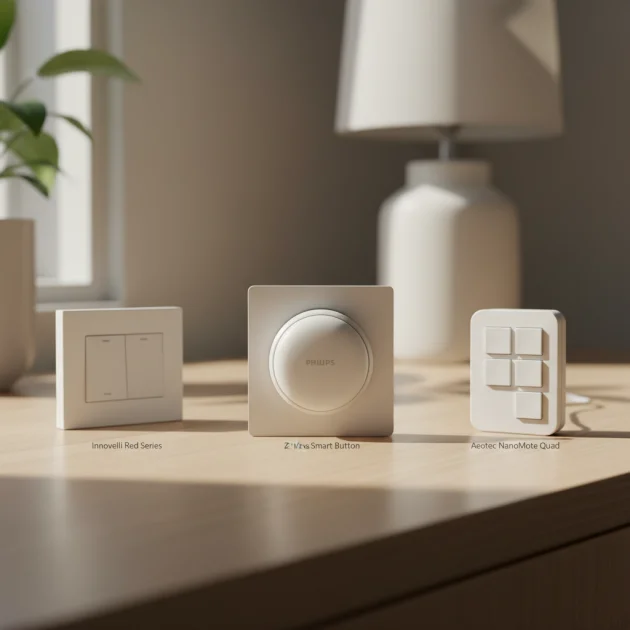
Quick comparison
| Product | Connectivity | Z-Wave Compatibility | Key Feature |
|---|---|---|---|
| Lutron Aurora Smart Bulb Dimmer | Zigbee (Hue Bridge) | Via Z-Wave Hub (Scene Control) | Covers existing toggle switches |
| Friends of Hue Smart Switch (e.g., RunLessWire) | Zigbee (Hue Bridge) | Via Z-Wave Hub (Scene Control) | Kinetic energy powered |
| Philips Hue Wall Switch Module | Zigbee (Hue Bridge) | Via Z-Wave Hub (Scene Control) | Converts traditional switches |
What Z-Wave needs from a Smart Switch
Z-Wave systems require smart switches that can either directly communicate using the Z-Wave protocol or integrate seamlessly through a bridge or hub. For Philips Hue switches, which operate on Zigbee, direct Z-Wave communication is not possible. Therefore, Z-Wave needs a smart switch solution that can trigger scenes or control individual Hue bulbs via the Philips Hue Bridge, which then communicates with the Z-Wave hub. This setup allows the Z-Wave controller to send commands to the Hue Bridge, effectively controlling the Zigbee-based Hue lights. The ideal smart switch in this scenario acts as an input device for the Z-Wave system, enabling users to activate pre-defined lighting scenes or toggle specific lights. It must offer reliable signal transmission and quick response times. Furthermore, the switch should be easy to install and configure within both the Philips Hue app and the Z-Wave controller’s interface. Compatibility with various Z-Wave hubs is also crucial for broad applicability. The switch should maintain its functionality even if the internet connection is temporarily lost, relying on local network communication. Physical design and user experience, such as tactile feedback and aesthetic appeal, also contribute to a successful integration. For expert smart home reviews on this site.
Detailed reviews
Lutron Aurora Smart Bulb Dimmer
The Lutron Aurora Smart Bulb Dimmer is an excellent choice for integrating Philips Hue into a Z-Wave environment. It directly mounts over existing toggle switches, preventing accidental power cuts to your smart bulbs. This ensures your Philips Hue bulbs remain powered and connected to the Hue Bridge. The Aurora dimmer communicates with the Hue Bridge via Zigbee. A Z-Wave hub can then be configured to trigger specific Hue scenes or control individual lights based on the Aurora’s commands. It features a rotary dimmer for brightness control and a push-button for on/off functionality. Installation is straightforward, requiring no wiring. The device uses a CR2032 battery, offering a long lifespan. Its robust build quality and consistent performance make it a reliable component in a hybrid smart home setup. The dimmer’s design is unobtrusive, blending well with most decor. It provides tactile feedback, confirming button presses and rotations. This switch is ideal for users who want to maintain the functionality of their existing wall switches while gaining smart control over their Philips Hue lighting.
Friends of Hue Smart Switch (e.g., RunLessWire)
Friends of Hue smart switches, such as those from RunLessWire, offer a unique, battery-free solution for controlling Philips Hue lights. These switches generate their own energy from the press of a button, eliminating the need for batteries or external power. They communicate directly with the Philips Hue Bridge using Zigbee. To integrate with a Z-Wave system, the Z-Wave hub needs to be configured to interpret the commands sent by the Hue Bridge. For example, pressing a button on the Friends of Hue switch can trigger a specific scene within the Hue app, and the Z-Wave hub can then monitor and react to that scene activation. These switches are highly versatile, allowing placement anywhere without wiring constraints. They come in various designs, including single, double, and quadruple button configurations, offering flexibility for different control needs. The kinetic energy technology ensures long-term, maintenance-free operation. Their ease of installation and environmental friendliness make them an attractive option for expanding Philips Hue control within a Z-Wave ecosystem.
Philips Hue Wall Switch Module
The Philips Hue Wall Switch Module changes traditional light switches into smart controls for your Philips Hue lights. This small device installs behind your existing wall switch, converting it into a smart button that communicates with the Philips Hue Bridge via Zigbee. It ensures that your Hue bulbs always receive power, preventing them from becoming unreachable. When integrated with a Z-Wave system, the Z-Wave hub can monitor the state changes reported by the Hue Bridge. For instance, toggling the physical switch can activate a Hue scene, which the Z-Wave hub can then detect and use to trigger other Z-Wave devices or routines. The module supports both single and double-pole switches. It is battery-powered, with a battery life of approximately five years. Installation requires basic electrical knowledge to wire it behind the existing switch. This module is an excellent solution for maintaining the aesthetic of traditional switches while gaining full smart control over Philips Hue lighting, making it a strong candidate for Z-Wave integration through the Hue Bridge.
Routine fit
Integrating Philips Hue smart switches into a Z-Wave routine significantly enhances home automation capabilities. For example, a Z-Wave motion sensor detecting activity in a hallway can trigger a Philips Hue light scene via the Hue Bridge. Conversely, pressing a Philips Hue smart switch can activate a Z-Wave-controlled smart plug, turning on a fan or coffee maker. Users can establish routines where a specific button press on a Hue switch not only adjusts lighting but also locks Z-Wave door locks or arms a Z-Wave security system. This cross-platform interaction creates a more cohesive and responsive smart home environment. The key is configuring the Z-Wave hub to listen for changes or commands originating from the Philips Hue Bridge, enabling seamless communication between the two distinct protocols. This allows for complex, multi-device automation sequences.
FAQs
Can Philips Hue switches directly communicate with Z-Wave devices?
No, Philips Hue switches use the Zigbee protocol, while Z-Wave devices use the Z-Wave protocol. They cannot directly communicate with each other. Integration requires a central hub that supports both protocols, such as a Z-Wave hub capable of interacting with the Philips Hue Bridge. The Z-Wave hub acts as a translator, allowing commands from a Hue switch to trigger Z-Wave actions, or vice versa. This setup ensures seamless operation across different smart home ecosystems.
Do I need a Philips Hue Bridge for Z-Wave integration?
Yes, a Philips Hue Bridge is essential for integrating Philips Hue smart switches and bulbs into any smart home system, including Z-Wave. The Hue Bridge acts as the central controller for all Philips Hue devices, translating their Zigbee signals into a format that other smart home hubs can understand. Without the Bridge, Philips Hue switches cannot function as intended, nor can they be controlled by a Z-Wave hub.
How do Z-Wave hubs control Philips Hue lights?
Z-Wave hubs control Philips Hue lights indirectly through the Philips Hue Bridge. The Z-Wave hub connects to the Hue Bridge over your home network. It sends commands to the Hue Bridge, which then translates these commands into Zigbee signals for the Philips Hue lights. This allows Z-Wave scenes and automations to include Philips Hue lighting, providing unified control over your smart home devices.
Are there any Philips Hue switches that are natively Z-Wave?
No, Philips Hue does not manufacture any smart switches that are natively Z-Wave. All official Philips Hue smart switches and accessories operate on the Zigbee protocol. If you require a Z-Wave switch, you would need to purchase a dedicated Z-Wave switch from another manufacturer. The integration discussed here focuses on using Zigbee-based Hue switches within a Z-Wave ecosystem via a bridge.
What are the benefits of integrating Philips Hue with Z-Wave?
Integrating Philips Hue with Z-Wave offers several benefits, including expanded device compatibility and enhanced automation possibilities. It allows users to combine the robust lighting features of Philips Hue with the strong mesh networking and security features of Z-Wave devices. This creates a more comprehensive and versatile smart home system, enabling complex routines that involve both lighting and other smart home functions like door locks, thermostats, and sensors.
Verdict
For seamless integration of Philips Hue smart switches within a Z-Wave ecosystem, the Lutron Aurora Smart Bulb Dimmer stands out as the top choice. Its ability to cover existing toggle switches ensures constant power to Hue bulbs, a critical factor for reliable smart lighting. While no Philips Hue switch is natively Z-Wave, solutions like the Aurora, Friends of Hue switches, and the Hue Wall Switch Module effectively bridge the gap through the Philips Hue Bridge. This setup allows Z-Wave hubs to orchestrate complex automations, combining the strengths of both Zigbee and Z-Wave protocols for a truly integrated smart home experience. Prioritize a robust Z-Wave hub that offers strong integration capabilities with the Philips Hue Bridge for optimal performance.
Frequently Asked Questions
Can Philips Hue switches directly communicate with Z-Wave devices?
No, Philips Hue switches use the Zigbee protocol, while Z-Wave devices use the Z-Wave protocol, preventing direct communication. Integration requires a central hub, such as a Z-Wave hub, that can interact with the Philips Hue Bridge. This hub acts as a translator, enabling commands from a Hue switch to trigger Z-Wave actions or vice versa, ensuring seamless operation across different smart home ecosystems.
Is a Philips Hue Bridge necessary for Z-Wave integration?
Yes, a Philips Hue Bridge is essential for integrating Philips Hue smart switches and bulbs into any smart home system, including Z-Wave. The Hue Bridge serves as the central controller for all Philips Hue devices, translating their Zigbee signals into a format that other smart home hubs can understand. Without the Bridge, Philips Hue switches cannot function as intended, nor can they be controlled by a Z-Wave hub.
How do Z-Wave hubs control Philips Hue lights indirectly?
Z-Wave hubs control Philips Hue lights indirectly through the Philips Hue Bridge. The Z-Wave hub connects to the Hue Bridge over your home network, sending commands to the Bridge. The Hue Bridge then translates these commands into Zigbee signals for the Philips Hue lights, allowing Z-Wave scenes and automations to include Philips Hue lighting for unified control.
Are there any Philips Hue switches that are natively Z-Wave compatible?
No, Philips Hue does not manufacture any smart switches that are natively Z-Wave. All official Philips Hue smart switches and accessories operate on the Zigbee protocol. If a native Z-Wave switch is required, it must be purchased from another manufacturer, as the integration discussed focuses on using Zigbee-based Hue switches within a Z-Wave ecosystem via a bridge.
What are the main benefits of integrating Philips Hue with Z-Wave?
Integrating Philips Hue with Z-Wave offers several benefits, including expanded device compatibility and enhanced automation possibilities. It allows users to combine the robust lighting features of Philips Hue with the strong mesh networking and security features of Z-Wave devices. This creates a more comprehensive and versatile smart home system, enabling complex routines involving both lighting and other smart home functions like door locks and thermostats.
Smart home that does not lock you in
Free PDF — protocol compatibility matrix for 30 hubs and devices.
I tried the Philips Hue Wall Switch Module to convert my traditional switches. It does work as advertised, allowing my Z-Wave system to manage the Hue lights. However, the installation was a bit more fiddly than I anticipated, and it made the existing switch feel a little less ‘clicky’ than before. It’s a decent solution, but not as polished as I hoped.
I’ve been looking for a good solution to integrate my Hue lights with my existing Z-Wave setup, and the Lutron Aurora dimmer is exactly what I needed. It was super easy to install right over my old toggle switch, which means no more accidental power cuts to the smart bulbs. Now I can control everything seamlessly through my Z-Wave hub, which is a game changer for my smart home.
Finally, a way to get my Philips Hue bulbs to play nice with my Z-Wave network without a ton of complicated workarounds! The Lutron Aurora dimmer is fantastic. It covers the old switch perfectly and keeps constant power to the bulbs, which was my biggest headache before. Highly recommend for anyone with a mixed smart home ecosystem.
The Friends of Hue Smart Switch by RunLessWire is pretty cool. I love that it’s kinetic energy powered, so no batteries to worry about ever. It works great with my Hue Bridge and I’ve got it set up to trigger some scenes through my Z-Wave controller. My only minor gripe is that it feels a little lighter than I expected, but functionally it’s perfect.