Imagine walking into a perfectly lit home, where your lights adjust to your mood, your energy consumption is optimized, and your security is a step ahead – all controlled with a simple voice command or a tap on your phone. This isn’t a futuristic dream; it’s the everyday reality enabled by the humble yet powerful Smart Wall Switch. At QMSIT, we believe transforming your living space from ordinary to extraordinary should be accessible and straightforward. This comprehensive guide will illuminate every facet of the smart wall switch, empowering you to confidently upgrade your home and embrace true automation.
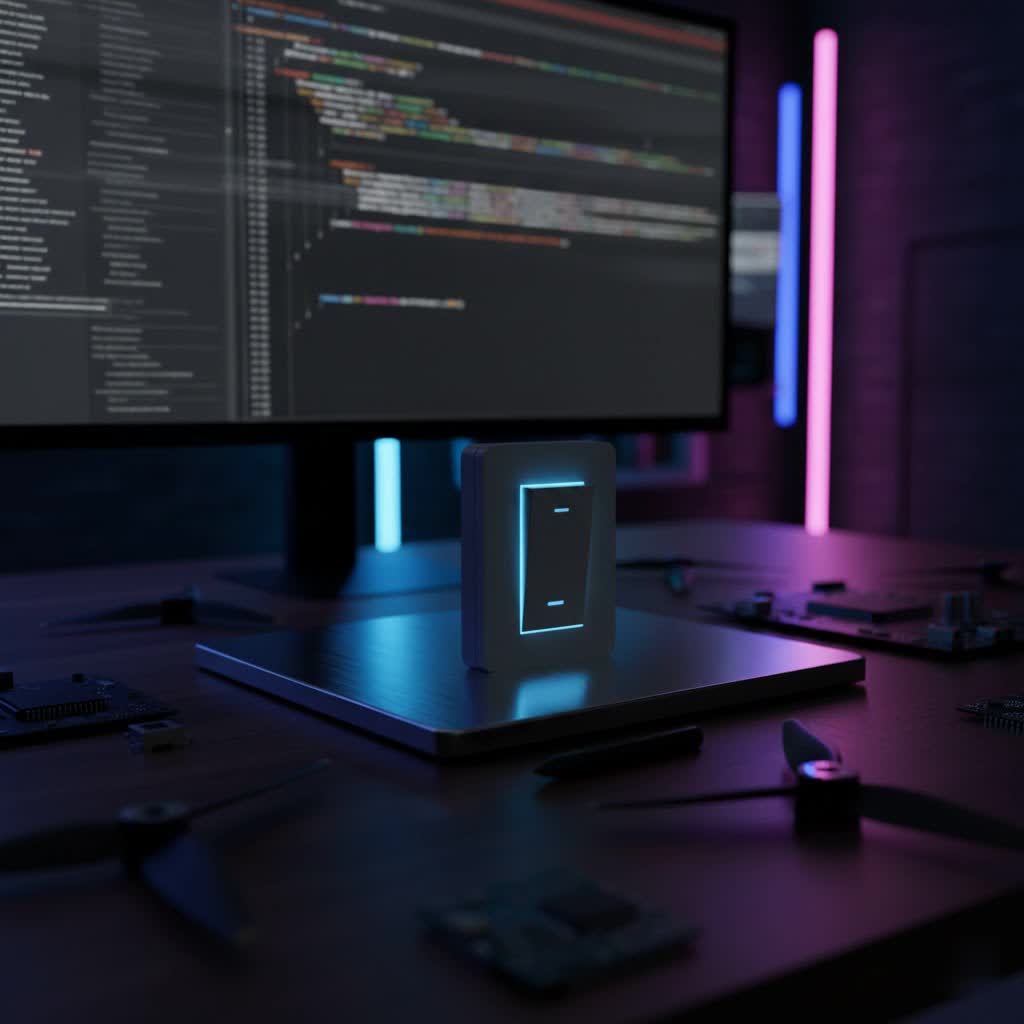
What Exactly is a Smart Wall Switch and How Does It Work?
At its core, a smart wall switch is a modern evolution of the traditional light switch, designed to replace your existing electrical controls. But it goes far beyond merely turning lights on and off. A smart wall switch integrates with your home’s network, allowing you to manage your lighting and other connected hardwired appliances—like ceiling fans or exhaust systems—remotely via smartphone apps, voice assistants like Amazon Alexa or Google Assistant, or through pre-programmed automated schedules. This connectivity is the “smart” element, granting you unprecedented control and flexibility that conventional switches simply can’t offer.
So, how does this magic happen? Internally, a smart wall switch houses a relay and sophisticated circuitry that connect to your home’s electrical circuit. When you press the physical button or send a command remotely, the switch’s internal relay opens or closes, controlling the power to your connected devices. The true intelligence comes from its network connection. Wi-Fi smart switches connect directly to your home router, offering a straightforward setup without needing an extra hub. However, this also means their functionality often relies on your internet connection and cloud servers, which can sometimes introduce slight latency.
Alternatively, Zigbee and Z-Wave smart switches operate on mesh networks. This means each switch can act as a repeater, extending the network’s reach and creating a robust, reliable communication pathway throughout your home. These protocols typically require a central hub to translate commands, but they often provide more responsive local control, meaning your smart devices can still communicate even if your internet goes down. A newer player in the game, Matter, aims to unify these different communication protocols, promising universal compatibility across various smart home ecosystems, simplifying the choice for consumers and ensuring future-proof integration.
“Smart wall switches are the unsung heroes of home automation, offering both seamless control and intelligent efficiency while subtly integrating into your home’s design,” says Emily Chen, a seasoned Smart Home Architect at QMSIT. “They’re a foundational element for any truly intelligent living space.”
The Irresistible Benefits of Upgrading to Smart Wall Switches
Making the leap to smart wall switches isn’t just about showing off cool tech; it’s about making your life easier, safer, and more efficient.
Effortless Convenience at Your Fingertips
|
Our Picks for the Best Smart Switch in 2026
As an Amazon Associate I earn from qualifying purchases.
|
||
| Num | Product | Action |
|---|---|---|
| 1 | Lutron Caseta 3 Way Smart Dimmer Light Switch Kit, Includes Pico Remote, Bracket, and LED Dimmer Switch, No Neutral Required, P-PKG1WB-WH |

|
| 2 | TREATLIFE Smart Light Switch Single Pole Works with Alexa, Google Home and SmartThings, 2.4GHz WiFi Timer Smart Switch, Neutral Wire Required, No Hub Required, FCC Listed, 4 Pack |
|
| 3 | GHome Smart Switches for Lights, WiFi Smart Light Switch Works with Alexa and Google Home, Single-Pole, Neutral Wire Required, 2.4Ghz WiFi Light Switch with APP Control, No Hub Required, UL FCC Listed |
|
| 4 | Kasa Matter Smart Light Switch: Voice Control w/Siri, Alexa & Google Assistant, UL Certified, Timer & Schedule, Easy Guided Install, Neutral Wire Required, Single Pole, 2.4GHz Wi-Fi, 3-Pack |
|
| 5 | Kasa Smart Light Switch HS200P3, Single Pole, Needs Neutral Wire, 2.4GHz Wi-Fi Light Switch Compatible with Alexa and Google Home, UL Certified, No Hub Required, 3 Count -Pack of 1 , White |
|
| 6 | HALO Pure Smart Wi-Fi Dimmer Switch for Traditional Non-Smart Lighting, Connected by WiZ Pro, Hardwired 120V - SWW-DIM-WH |
|
| 7 | Kasa Smart Dimmer Switch HS220P3, Single Pole, Needs Neutral Wire, 2.4GHz Wi-Fi Light Switch Works with Alexa and Google Home, UL Certified,, No Hub Required, 3-Pack |
|
| 8 | Kasa Smart Switch 2-Gang HS200-2, Single Pole,Neutral Wire Required, 2.4GHz Wi-Fi Light Switch Compatible with Alexa and Google Home, UL Certified, No Hub Required, White |
|
| 9 | Leviton Decora Smart Switch, Wi-Fi 2nd Gen, Neutral Wire Required, Works with Matter, Alexa, Google Assistant, Apple Home/Siri & Wired or Wirefree 3-Way, D215S-1RW, White |
|
| 10 | GHome Smart Switch, 3 Way Wi-Fi Light Switch Compatible with Alexa and Google Home, 2.4GHz Schedule Timer, Neutral Wire Required, 3-Way Installation, FCC Listed (4-Pack), White |
|
Imagine arriving home to a dark house. Instead of fumbling for the light switch, a smart wall switch allows your lights to welcome you, turning on automatically as you approach, or simply responding to your voice command from your car. Forgot to turn off the lights before leaving for vacation? No sweat! A quick tap on your smartphone app from anywhere in the world lets you manage your home’s lighting. This remote accessibility provides incredible peace of mind and unparalleled convenience.
Boosting Your Home’s Energy Efficiency
One of the most compelling advantages of smart wall switches is their potential to significantly reduce your energy bills. Many models come equipped with programmable scheduling features, allowing you to set lights to turn on or off at specific times, or even sync with sunrise and sunset. Dimming capabilities, common in many smart switches, let you adjust light intensity, consuming less power while creating the perfect ambiance. Some advanced smart switches even offer energy monitoring, providing insights into your electricity consumption, empowering you to make smarter decisions about your lighting usage. This proactive approach to energy management can lead to substantial savings over time.
Enhanced Security and Peace of Mind
Beyond convenience, smart wall switches play a vital role in bolstering your home’s security. Through automation, you can program your lights to turn on and off randomly throughout the day and evening, mimicking occupancy even when you’re away. This “phantom presence” is a powerful deterrent for potential intruders. Furthermore, many smart switches can integrate with your existing home security system, automatically illuminating areas if motion is detected or an alarm is triggered. It’s an extra layer of protection that helps you sleep easier.
Customizable Ambiance for Every Mood
Say goodbye to static lighting. With smart wall switches, you gain the power to create customized lighting scenes that perfectly match any activity or mood. Whether you’re settling in for a cozy movie night, hosting a vibrant dinner party, or need bright, focused light for reading, you can activate your desired scene with a single command or tap. This level of personalized control transforms your living spaces, making your home truly yours.
Navigating the World of Smart Wall Switch Connectivity
The “smart” in smart wall switch often comes down to how it connects to your home network. Understanding the different connectivity protocols is key to building a seamless smart home ecosystem.
Wi-Fi Smart Switches
Pros: These switches connect directly to your home’s Wi-Fi router, meaning you typically don’t need a separate smart home hub. This makes them a popular choice for beginners or those looking to automate just a few lights. Installation is often straightforward, and control is usually via a manufacturer-specific app, often compatible with major voice assistants.
Cons: Wi-Fi switches can consume more bandwidth and may introduce a slight delay (latency) as commands often travel to a cloud server and back. If your internet goes down, their smart features are usually disabled, reverting to basic manual control. They can also contribute to network congestion if you have many Wi-Fi-connected devices.
Zigbee and Z-Wave Switches
Pros: These switches form a mesh network, where each powered device (like a wall switch) can relay signals to others, extending the network’s range and reliability. They are designed for low-bandwidth communication, making them highly efficient and less prone to Wi-Fi interference. Critically, many Zigbee and Z-Wave setups offer local control, meaning your automations can continue to function even if your internet connection is interrupted. They are excellent for larger smart homes with many devices.
Cons: Both Zigbee and Z-Wave require a dedicated smart home hub to function and communicate with your wider smart home ecosystem. This adds an initial cost and another device to manage.
Matter: The Future of Interoperability
Matter is a newer, open-source connectivity standard designed to simplify smart home device compatibility. It aims to allow devices from different manufacturers to communicate seamlessly with each other, regardless of their underlying network technology (Wi-Fi, Thread, Ethernet). For smart wall switches, Matter promises unprecedented interoperability, reducing the fragmentation often seen in the smart home market. This means you could mix and match brands with greater ease, knowing they’ll work together effortlessly.
Choosing the Right Protocol
When selecting your smart wall switch, consider your existing smart home setup. If you’re just starting and prefer simplicity, Wi-Fi might be a good entry point. If you have a growing number of smart devices, or value reliability and local control, investing in a Zigbee, Z-Wave, or a Matter-compatible system with a hub will likely provide a more robust experience.
A Step-by-Step Guide to Installing Your Smart Wall Switch Safely
Installing a smart wall switch is a rewarding DIY project for many homeowners, but it involves working with electricity, so safety is paramount. Always prioritize safety and consult a qualified electrician if you’re unsure at any step.
Pre-Installation Checklist
Before you begin, gather your tools:
- Phillips and flathead screwdrivers
- Non-contact voltage tester (essential for safety)
- Wire strippers
- Wire connectors (wire nuts)
- Electrical tape
- Your smartphone or tablet with the smart switch’s companion app installed
- The new smart wall switch itself, including its instructions and any provided labels.
Safety First: Turning Off the Power
This is the most crucial step. Go to your home’s circuit breaker box and locate the breaker that controls the light switch you’re replacing. Flip it to the “OFF” position. Don’t skip this: use your non-contact voltage tester to confirm that the power is completely off at the switch location before touching any wires. Insert the tester into the switch box, and if it remains silent, you’re good to proceed.
Removing Your Old Switch
Carefully remove the wall plate from your existing switch. Then, unscrew the switch from the electrical box and gently pull it out to expose the wiring. Take a moment to observe how the wires are connected. You’ll typically see:
- Line wire (Hot): Usually black, bringing power to the switch.
- Load wire (Switched Hot): Also often black, carrying power from the switch to the light fixture.
- Neutral wire: Usually white, essential for most smart switches as it provides a continuous power path for the switch’s internal electronics.
- Ground wire: Green or bare copper, a safety wire.
- Traveler wires (for 3-way/multi-way switches): Red or other colors, for controlling a light from multiple locations.
Use the labels provided with your new smart switch, or create your own, to clearly mark each wire before disconnecting anything. This prevents confusion later.
Wiring Your New Smart Switch
Now, follow your smart switch’s wiring diagram precisely. Most smart wall switches require a neutral wire for proper operation. If your older home lacks a neutral wire in the switch box (common in homes built before the 1980s), you’ll need to either run one or purchase a “no-neutral” smart switch designed for such installations. These no-neutral switches typically draw power from the load wire and may have specific bulb compatibility requirements.
Connect the wires from your wall to their corresponding terminals on the new smart switch. Use wire connectors to ensure all connections are secure and neat. Gently tug on each wire to confirm it’s firmly in place.
“Always double-check your wiring with a non-contact voltage tester, even after flipping the breaker. Safety is paramount when dealing with electrical installations,” advises John Davis, Senior Electrical Engineer at QMSIT.
Securing and Finishing the Installation
Carefully push the newly wired smart switch back into the electrical box, taking care not to pinch or crush any wires. Secure the switch to the wall box using the provided screws, ensuring it’s level. Finally, attach the new faceplate.
First Power-Up and App Configuration
Return to your circuit breaker box and switch the power back on. Your new smart wall switch should illuminate or indicate it’s receiving power. Test the physical button to ensure it controls your lights as expected.
The final step is to connect your smart switch to your home network using the manufacturer’s smartphone app. Follow the on-screen instructions, which typically involve creating an account, selecting your device, and connecting it to your Wi-Fi network or smart home hub. Once connected, you can configure settings, create schedules, and integrate with your preferred voice assistant.
Troubleshooting Common Smart Wall Switch Issues
Even the most sophisticated technology can hit a snag. Here are some common smart wall switch problems and how to troubleshoot them like a pro.
“My Smart Wall Switch Won’t Connect to Wi-Fi!”
This is perhaps the most frequent complaint. Smart switches often operate on the 2.4 GHz Wi-Fi band, which offers a wider range but slower speeds than 5 GHz.
- Check your Wi-Fi band: Ensure your smartphone is connected to your 2.4 GHz network during setup, and that your router supports this band.
- Router distance: If the switch is far from your router, the signal might be weak. Consider moving your router closer, using a Wi-Fi extender, or switching to a mesh network system.
- Restart everything: Power cycle your router, modem, and the smart switch itself (by turning off and on the breaker) to refresh connections.
- Password check: Double-check that you’re entering the correct Wi-Fi password.
- Interference: Other wireless devices or even microwaves can interfere with the Wi-Fi signal. Try to minimize these sources.
“The Switch Isn’t Responding to Commands.”
If your smart wall switch isn’t doing what you tell it to:
- Check power: Ensure the circuit breaker is on and the switch has power.
- App issues: Restart the smart switch’s app or your phone. Make sure both the app and the switch’s firmware are updated to the latest versions. Sometimes, removing the switch from the app and re-adding it can resolve glitches.
- Internet connection: Verify your home internet is active and stable. If the manufacturer’s servers are down, cloud-dependent switches may not respond.
- Voice assistant settings: For voice control, check your Alexa, Google Assistant, or Siri settings to ensure the switch is linked correctly and commands are being heard.
“I Have a Neutral Wire Problem in My Older Home.”
If you discovered your older home lacks a neutral wire during installation, don’t despair.
- No-neutral switches: Many manufacturers now offer smart wall switches specifically designed to work without a neutral wire. These may have different wiring requirements or be limited to specific bulb types (e.g., incandescent only, or specific LEDs). Always check product specifications carefully.
- Consult an electrician: If you’re uncomfortable modifying your home’s wiring, a licensed electrician can assess your setup and advise on the best solution, which might involve running a neutral wire or recommending a suitable no-neutral alternative.
“My Smart Wall Switch Flickers or Acts Erratically.”
Flickering lights or inconsistent behavior can be frustrating:
- Load compatibility: Ensure your bulbs are compatible with the smart switch, especially if it’s a dimmer. Some LED bulbs require specific dimmer types (e.g., leading edge vs. trailing edge).
- Minimum load: Some dimmers require a minimum wattage. If your LED bulbs consume very little power, you might need a “load resistor” (often included with no-neutral switches) to stabilize the circuit.
- Faulty unit: If all else fails, the smart switch itself might be defective. Contact the manufacturer’s support for assistance or a replacement.
Integrating Your Smart Wall Switch into Your Smart Home Ecosystem
The real power of a smart wall switch unfolds when it becomes a seamless part of your broader smart home ecosystem.
Seamless Harmony with Voice Assistants
Most smart wall switches are designed to work effortlessly with popular voice assistants. After connecting your switch to its app, you can link it to your Amazon Alexa, Google Home, or Apple HomeKit platform. This enables hands-free control: “Alexa, turn on the living room lights,” or “Hey Google, dim the kitchen to 50%.” It’s incredibly convenient and makes managing your home intuitive.
Creating Smart Scenes and Routines
Beyond simple voice commands, smart switches allow you to create sophisticated “scenes” and “routines.” Imagine a “Good Morning” scene that gradually brightens your bedroom lights, turns on your coffee maker, and even adjusts your thermostat. Or a “Movie Night” scene that dims the lights to a warm glow, closes the blinds, and activates your entertainment system, all with a single command. These personalized automations enhance comfort and streamline your daily life.
Connecting with Other Smart Devices
Smart wall switches can be integrated with other smart devices to create powerful automations. Link them with motion sensors to automatically turn on lights when someone enters a room and turn them off when it’s vacant. Connect them to smart door locks to illuminate your entryway when the front door unlocks. Pair them with smart thermostats to coordinate lighting and climate control based on occupancy. The possibilities are vast, allowing you to build an interconnected home that responds intelligently to your needs.
Top Smart Wall Switch Brands and Features to Consider (2025 Insights)
The smart wall switch market is constantly evolving, with new innovations and improved features emerging regularly. When choosing the best smart wall switch for your home, consider these key aspects and leading brands:
Key Features to Look For
- Dimming Capabilities: Essential for creating ambiance and saving energy.
- Multi-way Control: If you have lights controlled by two or more switches (like a hallway), you’ll need a 3-way or 4-way compatible smart switch system.
- Motion Sensing: Some switches include built-in motion sensors for hands-free automation in high-traffic areas like laundry rooms or garages.
- Energy Monitoring: Advanced models can track electricity usage, offering valuable insights.
- Gang Options: Switches are available in 1-gang, 2-gang, or even 4-gang configurations, allowing you to control multiple lights from a single wall plate.
- Aesthetics: Look for designs that complement your home decor, from modern touch panels to traditional rocker switches.
- Safety Certifications: Always choose switches certified by reputable organizations like UL, CE, or FCC, ensuring they meet safety standards.
Leading Brands (Based on 2025 Insights)
- Kasa (TP-Link): Often praised for ease of installation and strong compatibility with major smart home ecosystems. Their KS205 Matter Smart Light Switch is a top pick, offering local control and broad integration.
- Lutron Caseta: A premium choice, known for its exceptional reliability, dimming performance, and compatibility with a wide range of smart home platforms, including Apple HomeKit. They often require their own Smart Bridge.
- Leviton Decora Smart: Offers a comprehensive range of switches, dimmers, and motion sensors, with options for both neutral wire and no-neutral installations. Their Matter-enabled switches are gaining traction.
- Meross: Provides budget-friendly yet reliable Wi-Fi smart switches compatible with Alexa, Google Assistant, and Apple HomeKit, often requiring a neutral wire.
- GE Cync: Known for “no-neutral” options, making them a good choice for older homes. They offer a variety of dimmers and on/off switches.
- Aqara: Specializes in Zigbee-based devices, offering robust local control and integration with HomeKit, Alexa, and Google Home, often requiring an Aqara hub.
Many of these brands are increasingly adopting the Matter protocol, which is excellent news for future-proofing your smart home and ensuring broad compatibility. When making your selection, consider your budget, existing smart home devices, and specific features that matter most to you.
Conclusion
Smart wall switches are more than just a convenience; they are a fundamental component of a truly intelligent, energy-efficient, and secure home. From the effortless control they offer over your lighting and appliances to the peace of mind derived from enhanced security features and significant energy savings, the benefits are undeniable. By understanding how they work, choosing the right connectivity, mastering installation, and troubleshooting common issues, you’re well on your way to transforming your living space. Embrace the power of the smart wall switch and unlock the full potential of your smart home. Explore qmsit.com for more in-depth guides and expert insights, and share your smart home journey with our community!
